There is no such thing as the density of asphalt
Asphalt is not a material, it is a recipe: aggregate, binder and air in
proportions a plant designs for a job. Its unit weight follows the
aggregate, so it belongs to the mix rather than to the word. Every
asphalt calculator online will nonetheless hand you a tonnage from an
asserted 145 pounds per cubic foot, and none of them will tell
you which mix that is.
This one starts from the same figure, because a working answer beats no
answer when you are pricing a job. The difference is that it is labelled
estimated everywhere it appears — on the ticket, in the
shopping list, and in the line you copy out — and the page tells you the
single number to ask the plant for that makes it exact.
volume = area × thickness ÷ 12
density = Gmb × 62.4 lb/ft³ (water)
tons = volume × density ÷ 2,000
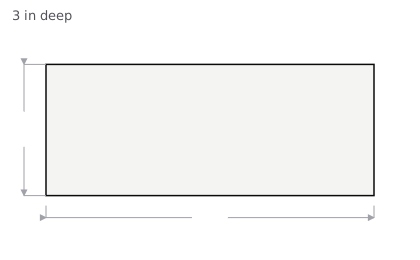
1,000 ft² at 3 in compacted
250 ft³ · 9.26 yd³ · 111.1 yd² at 3 in
Gmb 2.35 → 146.64 lb/ft³ → 18.33 US tons
Gmb is the number that exists
Bulk specific gravity of the compacted mixture. It is measured for every
mix design, it is on the job mix formula, and your contractor or the
plant has it. Unit weight is that figure multiplied by the density of
water — an exact conversion rather than an assumption.
Enter it and the estimate disappears: the ticket stops saying
"estimated", the tonnage becomes a figure you can order against, and the
pounds per square yard per inch it derives is the number a paving crew
will recognise. It is one phone call, and on a load of hot mix it is
worth making.
What the mix does to the tonnage
From this calculator. Note the third column: the 110 lb per square yard per inch a paving crew quotes from memory is not a constant — it is what a Gmb near 2.35 works out to, and it moves with the mix.
The unit paving is really bid in
Not tons and not cubic yards, but square yards at a stated thickness.
That is what a bid sheet says and what a plant ticket reconciles against,
so the ticket on this page reports it alongside everything else. Once you
have a density it converts straight to pounds per square yard per inch,
which is the number a crew will quote you back.
The base is the bigger half
A driveway almost never fails in the asphalt. It fails because the base
moved, and no thickness of surface saves a mat sitting on soft ground.
Two to three inches compacted is normal for cars and four or more where
trucks turn — but the compacted stone underneath is the order that
decides whether the drive is still flat in ten years, and it is a
separate calculation.
Order to the figure
Asphalt arrives hot and is laid the day it comes. Unlike every bagged
material on this site there is no surplus to keep for next weekend — a
part load is simply money cooling on the ground. Get the density from the
plant, measure the area properly, and order what you need.
The rest of the drive
The compacted stone under the mat comes off the
gravel calculator,
which handles the two-layer build and the compaction allowance a quarry
expects. If you are digging out first, the
excavation calculator
gives you what comes out and how much bigger it gets, and the
cubic yards to tons calculator
converts any of those volumes with published densities. Where the drive
meets a path or a step, the
wheelchair ramp calculator
handles the slope that has to meet ADA.
Common questions
How do you calculate asphalt tonnage?
Volume times density, and the density is the part nobody can give you honestly without knowing your mix. A 1,000 square foot drive at 3 inches compacted is 250 cubic feet, or 9.26 cubic yards. At a mix specific gravity of 2.35 — a normal dense-graded figure — that is 18.33 US tons. Change the mix and the tonnage changes with it.
How much does a cubic yard of asphalt weigh?
It depends on the mix, which is why this page asks rather than tells. Asphalt is a designed mixture of aggregate and binder, and its unit weight follows the aggregate — a mix built on a dense limestone weighs meaningfully more than one on a lighter aggregate. At a Gmb of 2.35 a cubic yard is about 3,959 pounds. The number on your job mix formula is the one to use.
Why does every other calculator say 145 pounds per cubic foot?
Because it is a serviceable rule of thumb that has been copied from calculator to calculator for years, and because giving you a number is easier than explaining that there is not a published one. It is not far off — most dense-graded mixes land near it. This page uses the same 145 when you give it nothing better, because a working figure beats no answer. The difference is that it says "estimated" every time it does, and it tells you exactly which number to ask for to replace it.
What is Gmb and where do I find it?
Bulk specific gravity of the compacted mixture — how heavy the mix is compared with water. It is on the job mix formula, and your paving contractor or the plant has it. Unit weight in pounds per cubic foot is simply Gmb times the density of water: 2.35 × 62.4 = 146.64. That is the whole conversion, it is exact rather than assumed, and it is the one number that turns the estimate on this page into a figure you can order against.
What is "pounds per square yard per inch"?
The unit paving is actually bid in, and it falls straight out of the density. At a Gmb of 2.35 the figure is 110 pounds per square yard per inch — which is exactly the 110 that paving crews quote from memory. It is not a constant handed down from anywhere; it is what that density works out to, and it moves when the mix moves. The table below shows it across the normal range.
How thick should an asphalt driveway be?
Two to three inches of compacted surface over a properly compacted base for a residential driveway carrying cars, and four inches or more where trucks turn. But thickness is the smaller half of the decision: what fails is almost never the asphalt, it is the base underneath. A three inch mat on six inches of well-compacted stone outlasts a four inch mat on soft ground every time, and this calculator does not size the base — the gravel calculator does.
Should I add for compaction?
Only if you are ordering to a loose depth rather than a compacted one. The thickness on this page is the finished mat, which is how paving is specified and how you should measure it. Asphalt is laid appreciably thicker than it finishes and rolled down, so if the number you have is the loose lay depth, add the allowance and the tool will carry it.
Can I order a little extra?
Less freely than with any other material on this site. Asphalt arrives hot and has to be laid the day it is delivered — there is no part-load to keep in the garage for next weekend, and a surplus is money left on the ground. That is precisely why the estimate here is worth replacing before you order: measure carefully, get the density from the plant rather than from a website, and order to the real figure.
Sources
The stored density is an ESTIMATE and is kept in `estimatedDensity` rather than `density` so nothing can read it by accident. Every asphalt calculator online asserts 145 lb/ft3; the figure is serviceable as a rule of thumb and it traces back to no publication that states it as a specification. What the industry actually measures is Gmb, the bulk specific gravity of the compacted mixture, which the plant determines for each mix design — and unit weight is simply Gmb times the density of water. So the tool leads with the exact conversion when a Gmb or a plant unit weight is supplied, falls back to the estimate when neither is, and labels which of the three it used every single time.
Unit conversions are exact by definition and need no source.
How we choose and cite these figures