Two cubic yards that are not the same cubic yard
Dirt is quoted two ways and they differ by up to two fifths. Loose
is dirt that has been dug — on a truck, in a pile, delivered.
Bank is the same dirt undisturbed in the ground. Digging
opens voids that the ground's own weight had closed, so a bank yard
becomes more than a yard the moment a bucket touches it.
yd³ = area × depth ÷ 12 ÷ 27
tons = yd³ × lb per yd³ ÷ 2,000
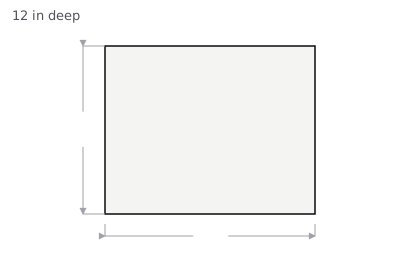
500 ft² filled 12 in deep, dry earth
18.52 cubic yards
loose 17.59 – 20.37 tons
bank 20.19 – 27.59 tons
wet 25.93 – 29.63 tons
The weight is a band, and the band is published
These figures are US Army FM 5-434 Table 1-2 — public domain, eleven
named materials, both measures, and the swell between them. It is the
same table the excavation calculator reads, so a hole and the dirt that
fills it can never disagree here. Where the manual prints a range this
page prints the range, because a yard of dirt genuinely is not one number.
What a cubic yard of dirt weighs
FM 5-434 Table 1-2. Loose is what arrives on a truck; bank is what is still in the ground. Moisture moves these figures more than grading does, and nothing published accounts for the weather.
Fill dirt is not topsoil
Fill is subsoil: cheap, stable, largely sterile, and the right thing under
a slab, behind a wall or bringing a low spot up to grade. Topsoil is the
growing layer and it compacts, settles and holds water in ways you do not
want under anything structural. Use fill for the volume and topsoil for
the last few inches — buying one for the other's job is expensive in both
directions.
Weight, not volume, fills the truck
A tandem dump carries roughly ten to fourteen cubic yards, but the limit
that bites is almost always the axle rating rather than the body. Wet clay
hits it long before the truck looks full, which is why a load quoted in
yards can arrive short of them. Ask your supplier what they load to, and
work from the top of the weight band when it matters.
The rest of the ground
The excavation calculator
works the other direction — what comes out of a hole and how much bigger
it gets — from the same published table. For the growing layer on top, the
soil and topsoil calculator
handles the settling allowance, and the
sod calculator covers what goes
over that. To turn any of these yards into tons for a different material,
the cubic yards to tons calculator
publishes every density on the site, and the
cubic yard calculator
handles awkward shapes.
Common questions
How much dirt do I need?
Area times depth, converted to cubic yards. Five hundred square feet filled a foot deep is 500 cubic feet, which is 18.52 cubic yards. That part is arithmetic and it does not vary. What varies is the weight, and it varies a lot — the same volume of dry earth is 17.59 to 20.37 tons and the same earth wet is 25.93 to 29.63.
How much does a yard of dirt weigh?
Between about 800 and 3,500 pounds loose, depending entirely on what it is and how wet. Dry earth runs 1,900 to 2,200; wet earth 2,800 to 3,200; clay more again. These are the US Army's published figures for eleven named materials, not a single number somebody picked, and the page reports the band rather than a point because that is what the source gives.
What is the difference between loose and bank dirt?
Loose is dirt that has been dug and is sitting on a truck or in a pile. Bank is the same dirt undisturbed in the ground. Digging opens voids, so a bank cubic yard becomes more than a cubic yard once it is loose — dry earth swells 15 to 35 per cent. It matters because a delivery is quoted loose and an excavation is measured bank: on the worked example the same hole is 17.59–20.37 tons loose and 20.19–27.59 tons in the ground.
How many yards of dirt fit in a truck?
A standard tandem dump truck carries roughly 10 to 14 cubic yards, but the real limit is usually weight rather than volume — which is exactly why the weight band on this page matters. Wet clay will hit the axle rating well before the body is full, and a load quoted in yards can be short of them because the driver stopped at the legal weight. Ask your supplier what they load to.
Is fill dirt the same as topsoil?
No, and buying the wrong one is expensive in both directions. Fill dirt is subsoil: cheap, structurally stable, largely sterile, and what you want under a slab, behind a wall or bringing a low spot up. Topsoil is the growing layer, and it compacts, settles and holds water in ways you do not want under a structure. Fill for volume, topsoil for the last few inches — and the topsoil calculator handles that layer.
Should I allow for compaction?
For structural fill, yes. Dirt placed and rolled to a specified density takes more material than the void measures, because you are compacting it beyond the state it arrived in. How much more depends on the material and the specification, so it is a field here rather than an assumption. For filling a low spot in a lawn, the settling will happen on its own over a season and topping up later is easier than guessing now.
Where do these weights come from?
US Army Field Manual FM 5-434, Earthmoving Operations, Table 1-2. It is public domain, it names eleven materials rather than saying "dirt", and it publishes both the loose and bank weights along with the swell between them. Nothing on this page is a density anybody here estimated, and where the manual prints a band this page prints the band.
Does moisture really change it that much?
More than anything else you can control. Dry earth is 1,900 to 2,200 pounds a loose cubic yard and wet earth is 2,800 to 3,200 — nearly half again. A pile that has sat in the rain for a week is a genuinely different material to haul, and none of these published figures account for the weather on the day. If you are working to a trailer rating, work to the top of the band and treat it as a floor.
Sources
Two published tables from one public-domain source, kept separate because the manual keeps them separate. Table 1-2 carries swell, load factor and weight for eleven named materials and is what the calculator works from. Table 1-1 carries the full six-way conversion between bank, loose and compacted for five broader material classes, and is published on the page as a reference rather than read by the calculator. Merging them would mean picking a Table 1-2 row to stand for a Table 1-1 class, which is a choice nobody published. Swell is stored as the band the manual prints, not as a midpoint: dry earth is 15 to 35 percent, and the difference between those ends is two extra truck loads in twenty.
Unit conversions are exact by definition and need no source.
How we choose and cite these figures